
The Infrastructure Behind Modern Retail Catalogs

Wonder unifies master catalog data, real-time inventory, and synchronized pricing so enterprise retailers can power stores, ecommerce, suppliers, and AI discovery from a single product data infrastructure.

Fragmented Systems Are Costing You Sales

Most retailers operate with product information, inventory, and pricing living in separate platforms. The result is mismatches, incorrect listings, and catalog updates that take days instead of seconds.
Image of male frustrated by all the different portals

Catalog Data Locked in Silos

Product attributes, media, and descriptions scattered across spreadsheets, vendor portals, and legacy PIM systems make catalog updates slow, error-prone, and expensive.

Inconsistent Pricing Across Channels

When your website, in-store systems, and supplier feeds show different prices, customers lose trust and your team loses time reconciling discrepancies manually.

Phantom and Stale Inventory

Selling items that aren't in stock or failing to surface items that are means lost revenue on both ends. Without live inventory data, every catalog is a guess.
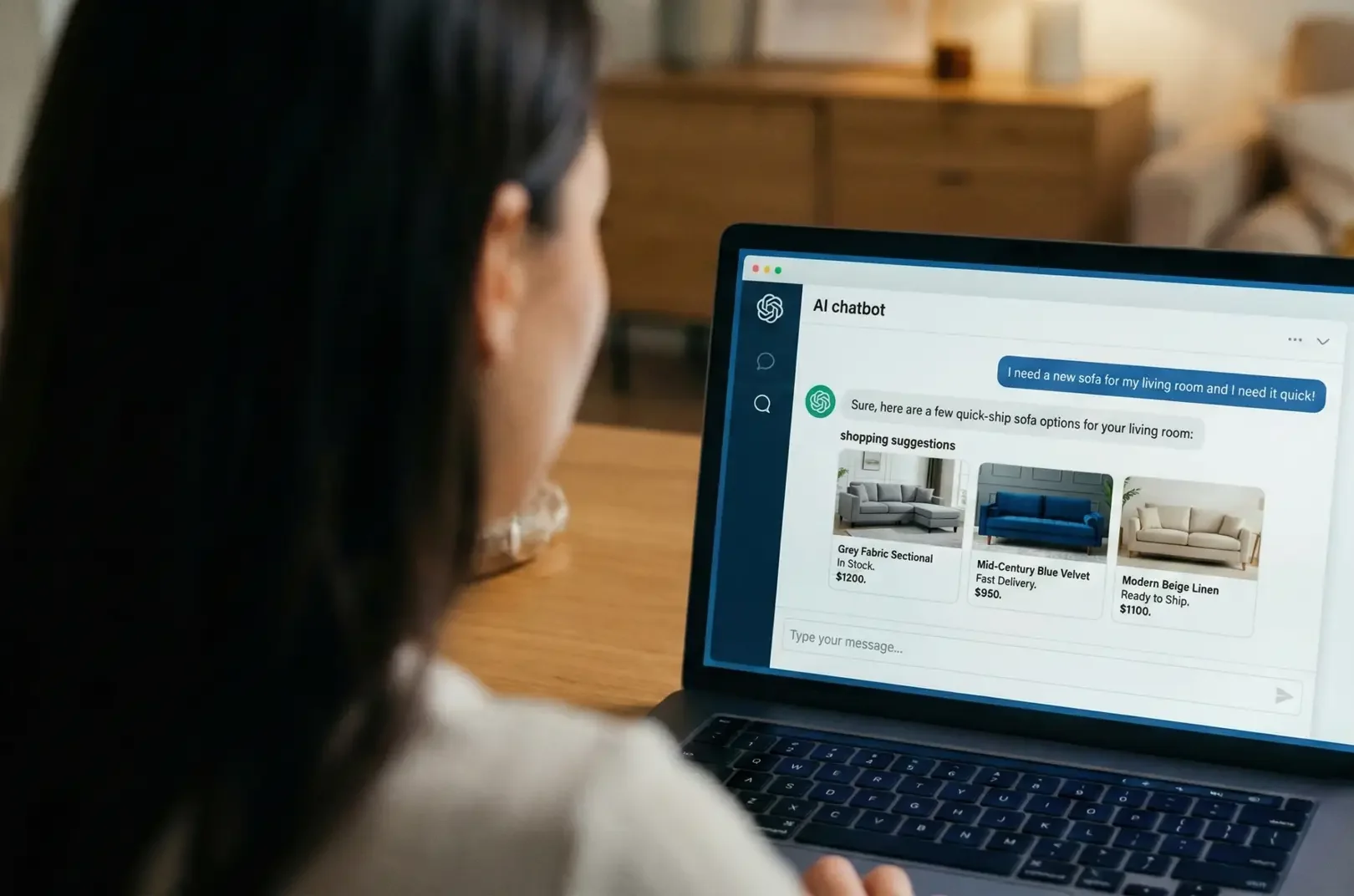
Image of woman searching with Agentic Commerce

Invisible to AI Discovery

AI shopping assistants and conversational search engines can't surface products buried in unstructured, non-vectorized catalog data. If your data isn't machine-readable, your products don't exist to the next generation of buyers.
Three Infrastructure Layers, One Source of Truth

Wonder operates three core infrastructure layers together as a single platform, not three separate vendors stitched together with custom integrations

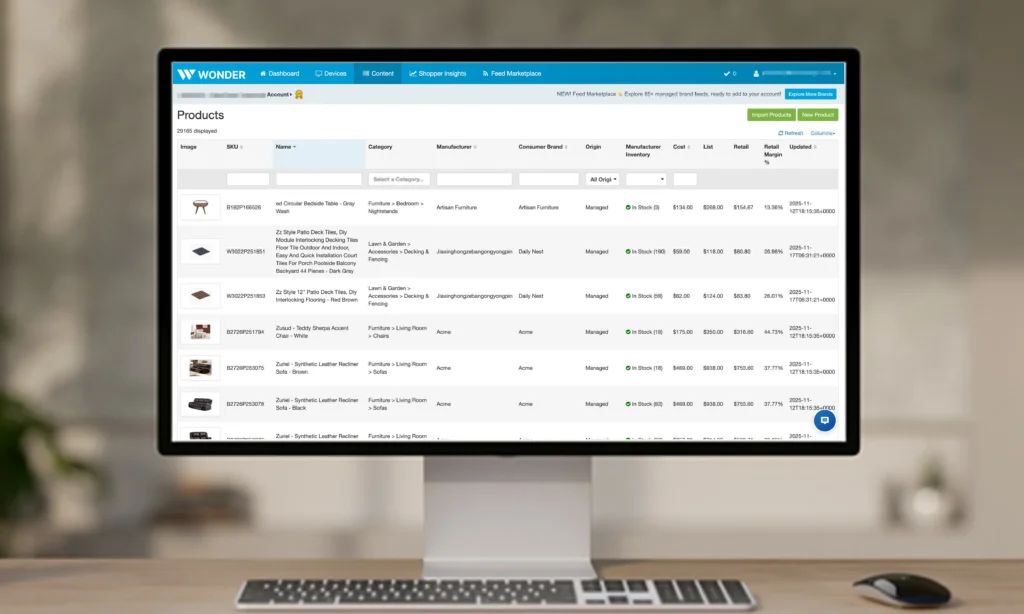
1. Master Catalog Infrastructure

Image of a tablet using Wonder receiving product catalogs from all vendors in one format daily

Catalog Service

One clean catalog for unlimited managed brand catalogs with live, standardized, AI-readable product data. Retailers maintain a single source of truth instead of duplicating records across systems.

✔️ Attributes, variants & media
✔️ Keywrod rich & structured data
✔️ Vectorized for AI discoverability
✔️ Standardized across all brands
2. Pricing Synchronization Infrastructure

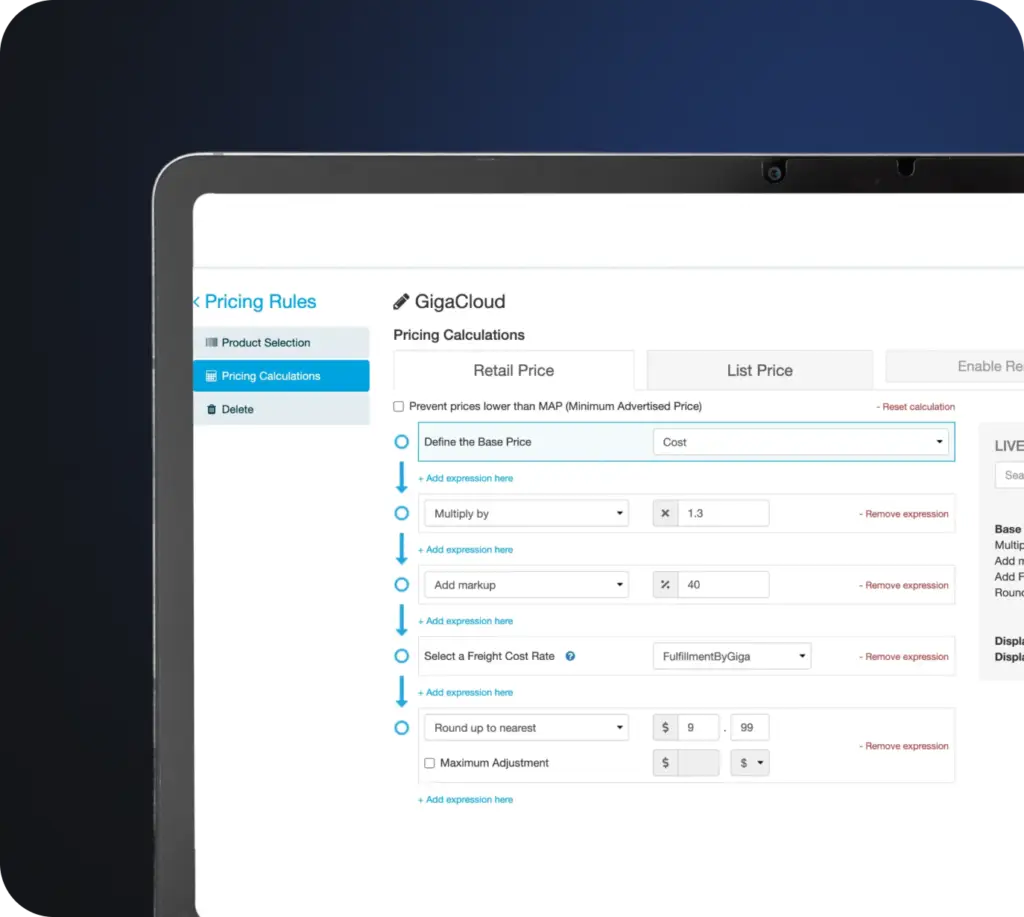
Image of a tablet using Wonder to showcase the smart pricing engine

Pricing Service

Centralized pricing logic managing MSRP, MAP rules, promotional pricing, margin requirements, and channel-specific overrides. Update once; every channel reflects it instantly.

✔️ MSRP & MAP enforcement
✔️ Promotional & margin rules
✔️ Channel-specific pricing overrides
✔️ Eliminates cross-channel price conflicts
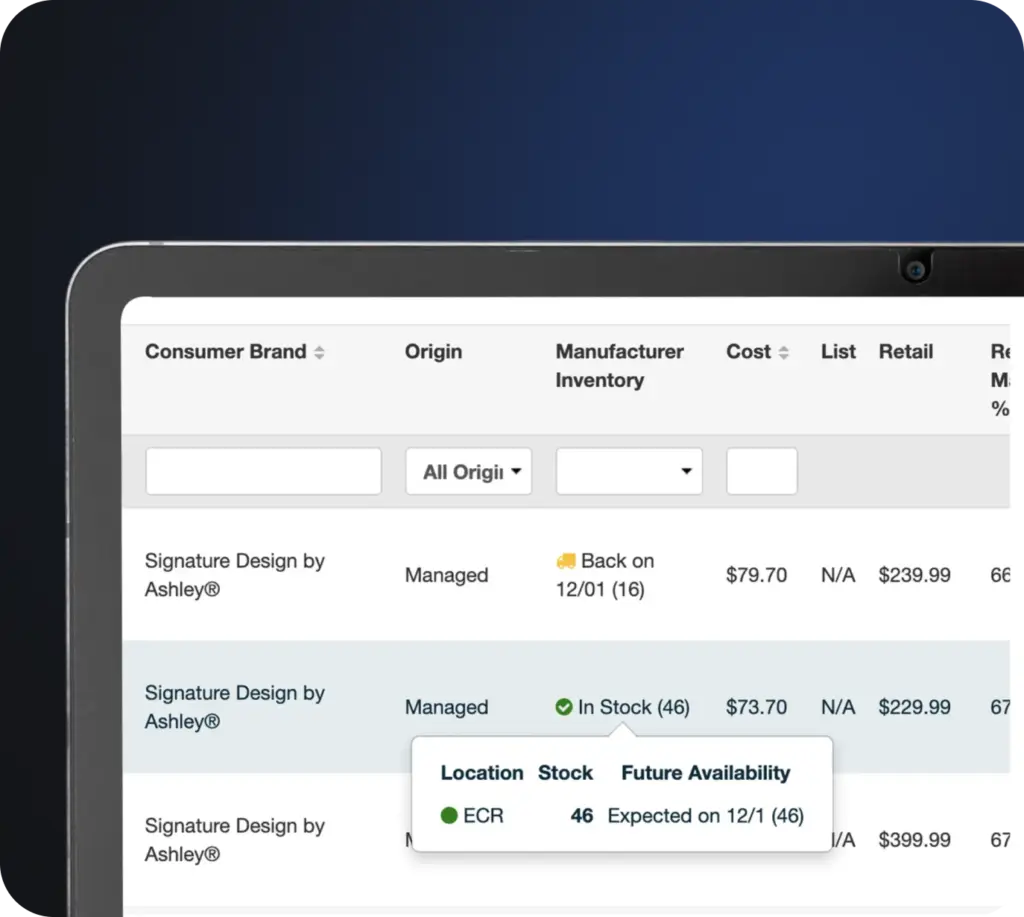
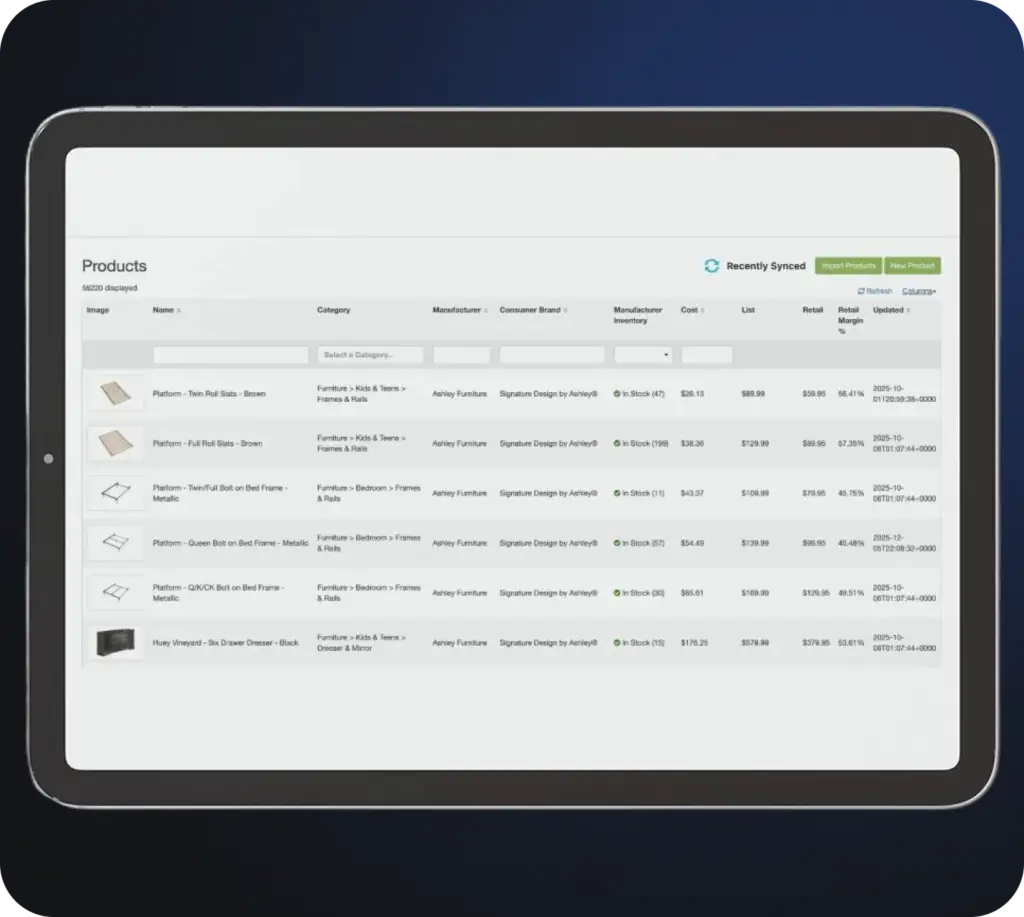
3. Real-Time Inventory Infrastructure

Image of a tablet showcasing real time inventory for a catalog

Inventory Service

Live inventory across stores, warehouses, and suppliers—not nightly batch syncs. Supports drop-ship fulfillment and supplier-fulfilled retail programs without a separate integration.

✔️ Factory stock & local warehouse quantities
✔️ Surfaces available-to-sell in real time
✔️ Eliminates phantom inventory
✔️ Drop-ship & supplier fulfillment availability
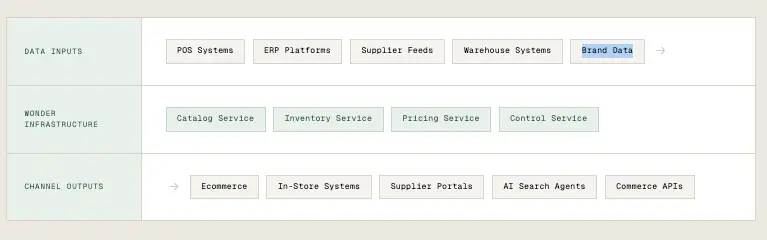
Wonder Operates the Layer
Between Your Systems and Your Channels

Commerce systems feed data into Wonder. Wonder normalizes, structures, and distributes it. Every retail channel reads from one synchronized record.

Most PIM Platforms Store Attributes, Wonder Powers Commerce

Traditional PIM vendors solve one part of the problem. They lack real-time inventory, pricing synchronization, supplier normalization, and deep commerce integrations. Wonder was built to operate all three layers together.

✕ Traditional PIM Platform

Stores attributes, doesn’t power commerce
Products are catalogued but there’s no live pricing logic, inventory sync, or channel distribution built in.

No real-time inventory
Inventory is a separate system requiring a separate integration, separate maintenance, and separate cost.

Batch updates, not live sync
Pricing and availability changes propagate on a schedule, not instantly, creating windows of inaccuracy across channels.

Not AI-ready
Flat attribute structures aren’t vectorized or structured for AI shopping agents, conversational search, or LLM-based discovery.

✓ Wonder Operating Layer

Catalog, inventory, and pricing as one platform
All three infrastructure layers operate together—no stitching, no custom middleware, no separate vendors.

Live inventory as a first-class service
Factory stock and warehouse quantities are native to the platform, surfaced in real time across every channel.

Instant cross-channel publishing
Update pricing once. Every system reflects it immediately- no batch windows, no reconciliation delays.

Vectorized and AI-ready by default
Product data is structured and machine-readable so your catalog is discoverable by AI agents, LLMs, and conversational search engines.

Your Products Need to Be

The next generation of retail discovery isn’t Google – it’s AI shopping assistants, conversational search engines, and LLM-powered recommendation systems. Wonder structures your catalog data to be found by all of them.

Vectorized Catalog Data
Unlike traditional SEO metadata or flat attribute files, Wonder encodes product data in vector-compatible formats that AI search agents can query semantically. Your products become discoverable through natural-language searches like “durable sectional under $2,000 in gray” – not just exact keyword matches.

Semantic Search Ready

Machine-Readable Product Structure
Wonder normalizes product attributes, pricing, availability, and media into structured schemas that LLMs can parse accurately. When an AI shopping assistant is asked for a recommendation, products in Wonder’s infrastructure surface with complete, reliable data – not broken or missing fields.

LLM-Parseable Schemas

AI Shopping Agent Compatibility
Conversational commerce tools, AI-powered retail advisors, and recommendation engines require product data that goes beyond a URL and a title tag. Wonder structures the full product context – specs, variants, availability, and pricing – so AI agents can confidently surface and compare your inventory.

Conversational Commerce

Future-Proof Discovery Infrastructure
Traditional SEO will remain relevant, but the fastest-growing discovery channel for considered purchases is AI-assisted search. Retailers running Wonder’s infrastructure are building discoverability into their catalog operations today – before competitors recognize the gap.

Next-Gen Retail Search

Stop Managing Data,
Start Accelerating Revenue

Join the retailers who have consolidated fragmented systems into a single product data infrastructure built for enterprise scale.

or call us directly: 1-855-408-9966

Image of screens tablets and phones using with Wonder

Frequently Asked Questions

No. Wonder is designed to work alongside your existing systems of record, not replace them. Your POS and ERP continue to operate as they do today.

Wonder connects to them via direct connectors or API-based integration, synchronizes product data, pricing, and inventory from those systems, and distributes everything to your retail channels in real time. There is no rip-and-replace, no retraining your back-office team, and no disruption to existing accounting or reconciliation workflows.

Learn more about integrations with Wonder.

Traditional PIM platforms store and manage product attributes but don’t power commerce. They typically lack real-time inventory sync, live pricing logic, supplier normalization, and deep commerce channel integrations. Wonder operates catalog, inventory, and pricing together as a single infrastructure layer – so retailers get one vendor, one integration surface, and one source of truth rather than three separate systems stitched together with custom middleware.

Vectorization means Wonder encodes your product data in a format that AI systems can query semantically – understanding meaning and context, not just matching keywords.

When an AI shopping assistant, conversational search engine, or LLM-powered recommendation system is looking for a product that matches a natural-language description, it can find and accurately represent your inventory. Retailers still running unstructured catalog data are invisible to these systems. Wonder makes your catalog readable by both people and machines. Read More.

Changes can propagate in real time – not on a batch schedule. When a price is updated in your POS or ERP, or when inventory shifts in your warehouse system, Wonder syncs and distributes that change immediately across every connected channel. There are no manual export steps, no overnight jobs, and no windows of inaccuracy where different systems show different data.

Wonder is built for enterprise-scale retail complexity – multi-location chains, regional franchise systems, and retailers managing large, multi-vendor catalogs across ecommerce and physical stores. If your operation involves coordinating product data across multiple locations, multiple suppliers, or multiple channels simultaneously, Wonder is built for that problem.

Wonder manages brand catalogs with a standardized data model that normalizes attributes, media, descriptions, and pricing logic across suppliers – regardless of how each brand delivers their data.

Retailers don’t need to manually reformat spreadsheets or build per-supplier transformation scripts. Wonder ingests supplier feeds, applies normalization rules, and outputs clean, consistent product records that can be distributed to any channel without additional work.