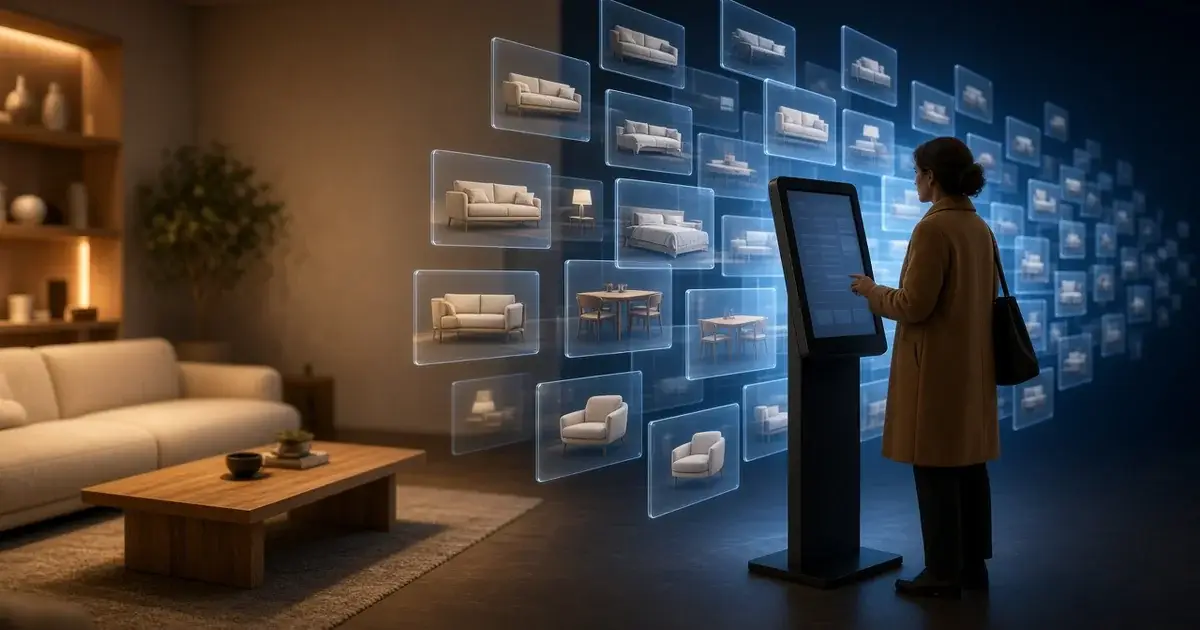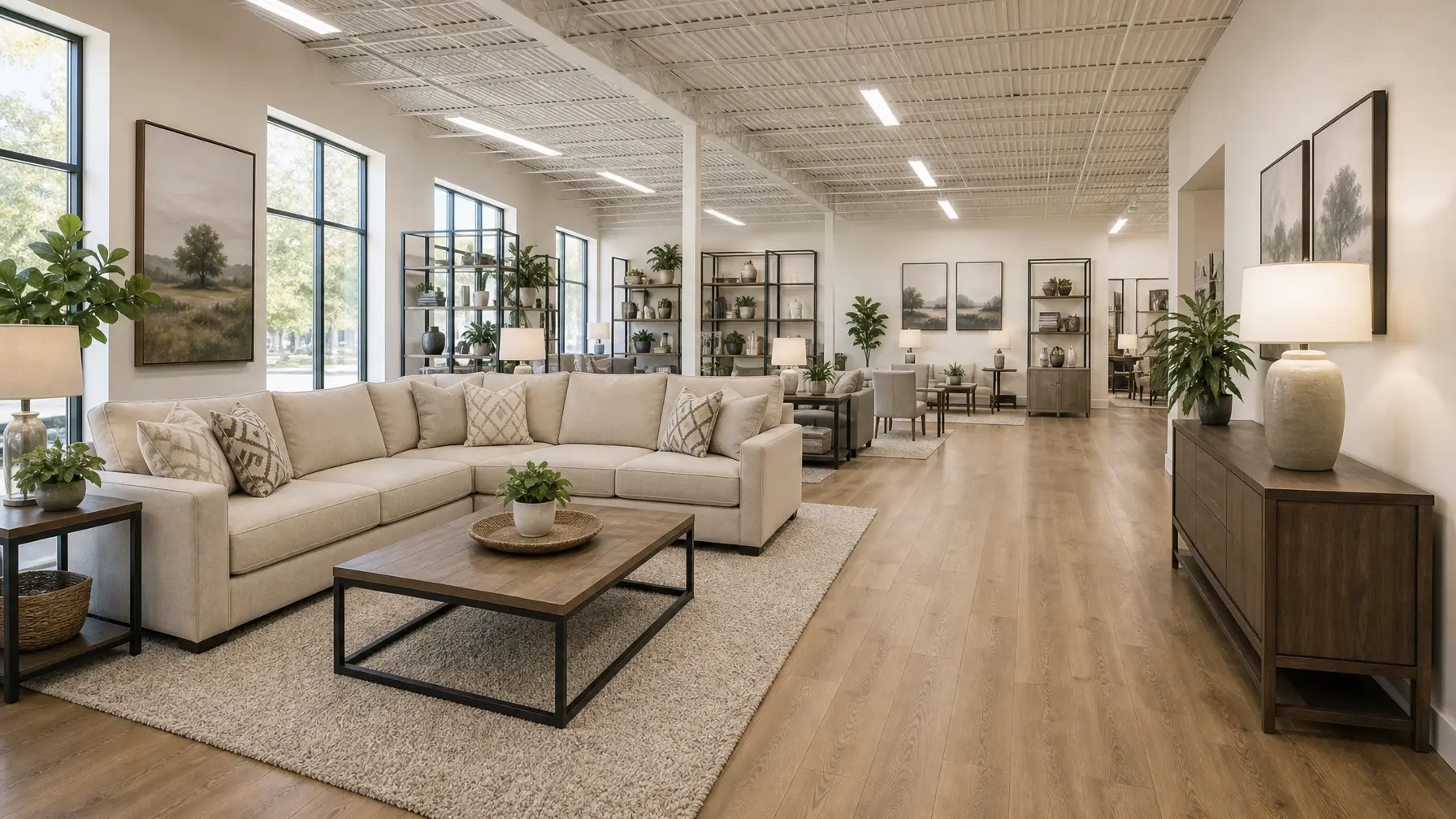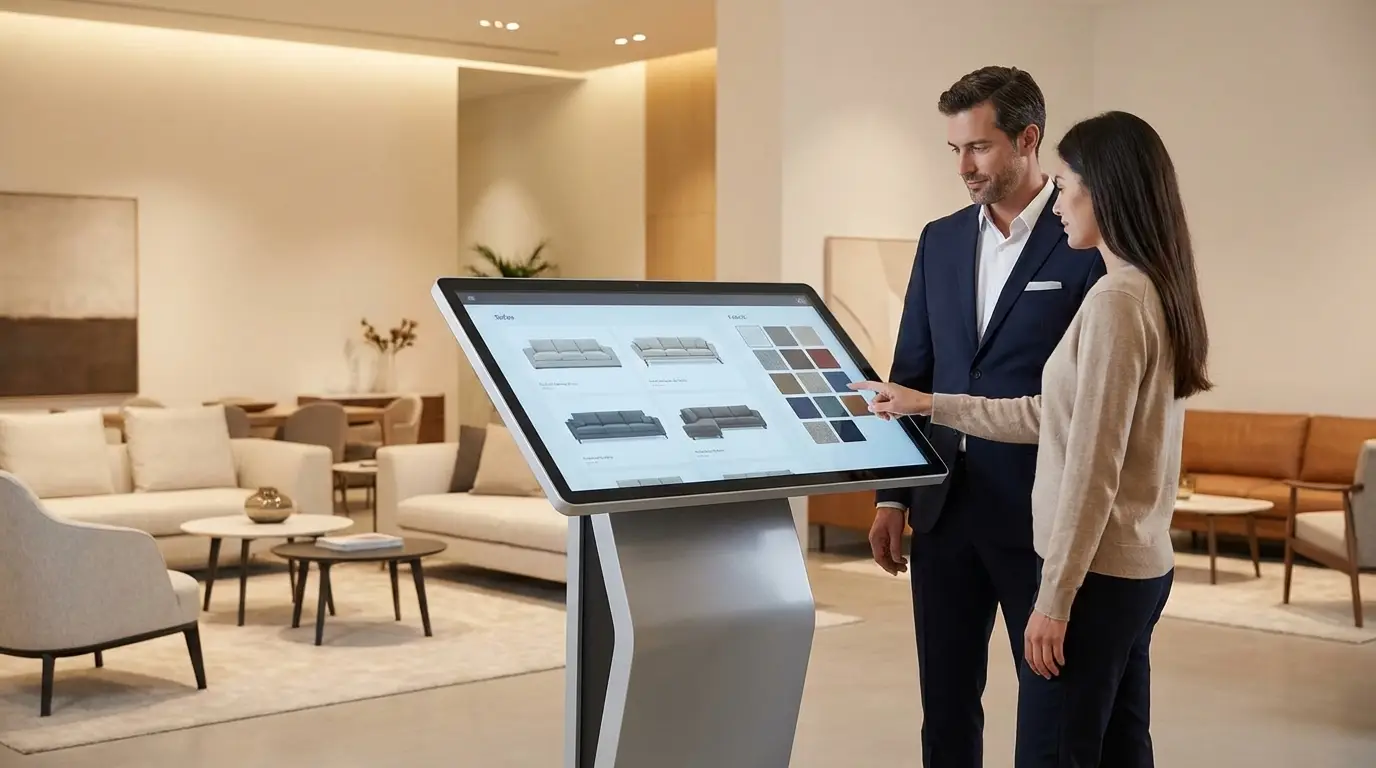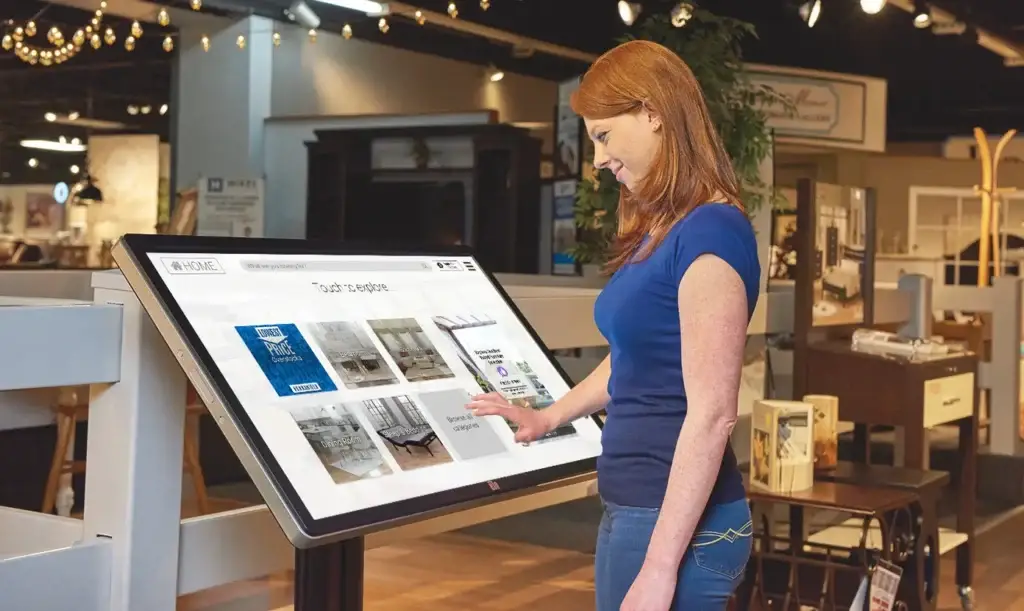
A retail gallery is a small themed setup on your floor, built so shoppers can buy a category you do not stock in depth. Specifically, about 8 to 10 pieces set the scene. A touchscreen kiosk in the middle holds the rest of the assortment. Then the sale can happen on that kiosk, or later from home. Fulfillment goes to the customer’s door.
Wonder, a GigaCloud company, is showing this as an extended aisle gallery. A handful of floor samples set the theme. The kiosk carries the wider offer. A small ecommerce site catches be-backs, the shoppers who leave and still mean to buy. In the concept Wonder is taking to High Point Market, that kiosk side is built around 30,000 SKUs ready to ship to the customer, including delivery to a ZIP in the 48 continental states.
Why a retail gallery fits an independent floor
Independent furniture stores already know the heavy version of assortment expansion. A classic store within a store often means leasing a pad to another brand, sharing the aisle, and hoping both teams tell the same story. Meanwhile, national chains have run that play for years, with a partner brand, a fixture package, and a long contract. It is a heavy lift when you have one building, one payroll, and a warehouse already full of case goods.
A gallery keeps the new category on your ticket. Specifically, you pick the theme, you own the customer, and a few samples make the category feel real. For example, an outdoor setup in Wonder’s concept uses a pergola, a patch of turf, a chair, a grill, a cooler, and a few pool floats. The shopper reads the category in one glance. The kiosk carries the seating, the cooking pieces, and the rest of the outdoor line you never planned to put in the warehouse.
Because those kiosk goods are sold before they ship, you are not building a second stockroom for the theme. GigaCloud has said retailers can offer outdoor cooking stations, exercise equipment, pet products, sporting goods, and other large pieces without physically stocking them. Furniture Today reported that, with Iman Schrock’s comments, on October 1, 2026.
What goes on the floor, and what stays on the kiosk
Keep the floor edit tight. Wonder’s gallery concept uses 8 to 10 pieces, enough to set a theme without pretending the whole catalog is in the building. The kiosk is the extended aisle. Bunk beds, patio sets, treadmills, gaming chairs, and the long list of sizes sit there, ready to order.
However, shoppers still need a reason to trust a special order. Specifically, put the hero pieces where people walk, with a price and a lead time your team can say out loud. Then let the kiosk answer the questions the sample cannot: the other finish, the smaller size, the matching piece.
Meanwhile, you already pay rent on this square footage. The display does one job, and the catalog behind it does the next. Wonder’s in-store kiosk is how that second job gets onto the floor. For more on selling without adding building, see How Retailers Can Sell More Without Expanding.
Four steps from browse to doorstep
Wonder’s concept walks the sale in four beats.
- Discovery: shoppers walk the samples and browse the kiosk at the center.
- Decision: they can order at the kiosk with a card, a digital wallet, or a financing waterfall, meaning checkout can offer more than one financing path. Then, if they leave, they can finish later by text or email on your microsite.
- Fulfillment: in this concept, orders ship within 1 to 3 days from GigaCloud distribution centers, and tracking goes to your customer. GigaCloud has also said many marketplace products are eligible for next-day delivery, so the window you quote is the one on that SKU.
- Margin: a category you did not stock yesterday can still land on today’s ticket, because you did not fund a backstock of it first.
The supply chain name for that path is supplier fulfilled retail. GigaCloud fulfills the supplier’s product to your customer, and your store stays the place the shopper bought from. The longer piece is how home furnishings retailers adapt the supply chain.
Two galleries you can picture
Outdoor is the easy scene to stage. One small footprint stands in for a category you do not carry in depth. Meanwhile, the samples do the emotional work. The kiosk lists the rest, and the order ships to the shopper. Wonder’s gallery concept also notes that some stores look at free shipping on these orders. Price the freight before you print that word on a sign.
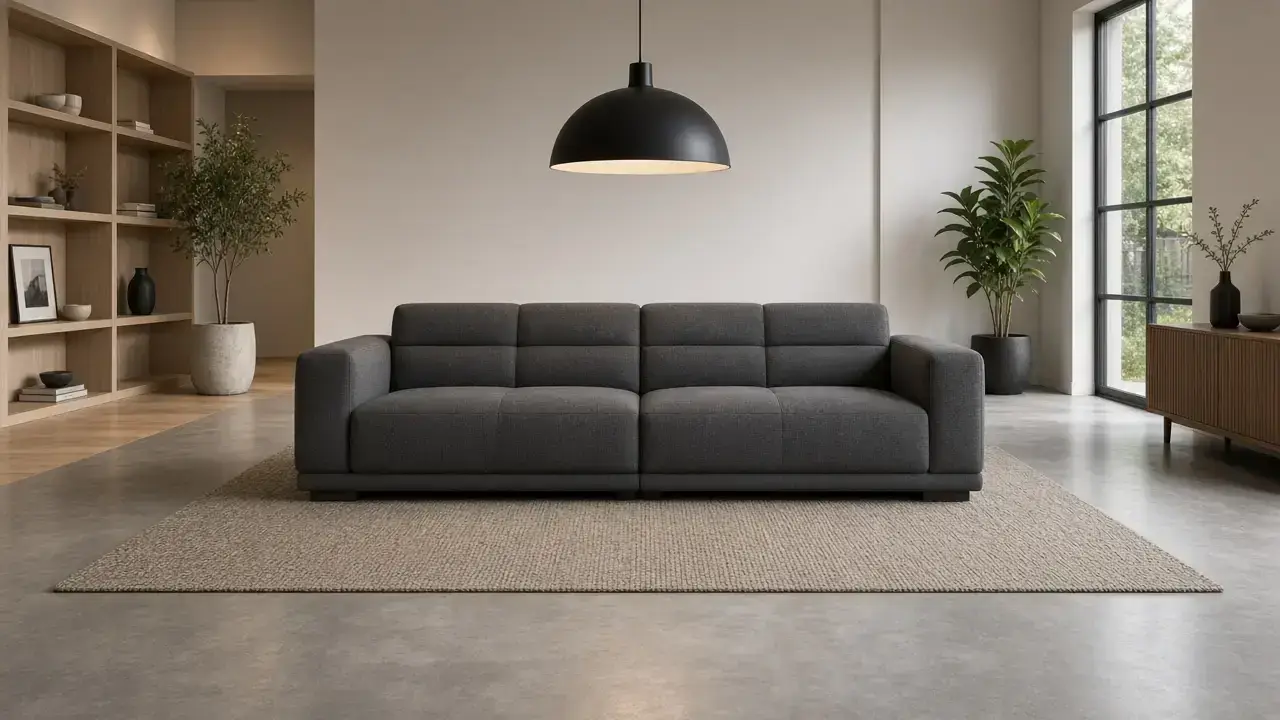
Pet shows how far a theme can sit from a case-goods core. Picture a performance-fabric sofa, a hypoallergenic rug, a few dog beds and cat trees, plus an eye-catcher such as a cat-cave ottoman or a pet stroller. Then parents who came in for a sectional can still buy the pet piece from you. As a result, the trip does not end with a note in their phone to check another website on the way home.
For example, fitness can run the same pattern: one machine on the floor, the variants on the kiosk, delivery to the house. Test it there before you ever give the category a full row of floor slots. After that, keep the samples that earn their carpet and rotate the ones that do not.
How a gallery compares with a leased pad
You will still hear the older name. A store within a store, sometimes called a shop-in-shop, usually invites another company onto your floor. Specifically, they bring a brand, a fixture package, and often their own staff or a fee. You are sharing the visit with a partner who wants to be seen.
A store within a store can still make sense when that partner’s brand is the reason people come in, and both sides want a long agreement. Meanwhile, a gallery fits when the draw should stay your store, and the new category is there to add a purchase the shopper can make before leaving. Specifically, the samples are yours to edit. The kiosk assortment is yours to turn on or off. Then you can retire a theme that did not sell without unwinding a lease.
In addition, local partners still help around the edges. A designer hour, a coffee cart, or a fabric-care demo can keep people in the building longer. However, those are events. The gallery is the selling tool that remains after the event staff goes home, because the kiosk can still take the order.
What your team has to be able to do
The screen cannot be the whole program. Kaspar Fopp, Wonder’s CEO, has described the offer as extended aisle shopping, an ecommerce microsite, mobile app training for sales associates, financing options, and digital wallet checkout. Furniture Today carried that description on October 1, 2026.
Specifically, train the opening shift on three sentences: what the theme is, how the order ships, and what the shopper pays today. Then give the team a reason to open the kiosk while the guest is standing there. The High Point setups also point at associate motivation. Tie any extra pay to the category you are trying to grow, and review it after the first month.
In addition, decide who owns be-backs. If the microsite sends a text or an email, someone on your team should recognize that shopper when they reply. While the sale can start on the floor, a lot of furniture tickets finish at a kitchen table later.
See the setups before you build one
At High Point Market, October 15 to 20, 2026, GigaCloud is using the entire second floor of the New Classic building at 135 S Hamilton Street in High Point. The company has said this showcase is triple its prior Market space. Specifically, eight themed galleries on that floor show the extended aisle with kiosks, checkout, and the microsite.
If you are in market, ask Wonder for a short walkthrough first. Plan on about 15 minutes. You can book a demo and ask for the High Point gallery walk. If you will not be in North Carolina, the same conversation still starts from your store: pick one category, count the samples you can spare, and match the kiosk to the ZIP codes you actually serve.