Home furnishings retailers keep adapting to the same pressure: the product the customer wants is heavy, slow, and expensive to guess. Supplier fulfilled retail is the adaptation where the store sells first and the goods move after the sale.
GigaCloud, the company that owns Wonder, uses the name supplier fulfilled retail, shortened to SFR. On its SFR page, GigaCloud describes the model as one where GigaCloud fulfills supplier products directly to the end customers of resellers. Retailers focus on selling. The order is fulfilled from the supplier side to the end customer, with fewer handoffs along the way.
Why forecast buying still ties up the floor
A traditional furniture buy starts with a forecast. You place the order months ahead, you pay for the goods, you store them, and you hope the vignette was the right bet. For example, when demand is softer than that forecast, the warehouse holds the miss. Meanwhile, when demand runs hotter, the floor is empty and the special order starts a long wait.
Big and bulky goods make either miss expensive. GigaCloud’s SFR page lays out three reasons. These products have low value density, so storage and delivery cost a lot relative to the merchandise value. In addition, they come in many sizes, colors, and styles, which makes demand hard to call. Meanwhile, a crowded field of resellers keeps price pressure high, so a buying mistake is difficult to bury in margin.
As a result, a store that tries to outrun supply chain trouble only by buying earlier, or buying deeper, often moves the risk from the port onto its own floor. However, tariffs, freight, and factory lead times still punish that guess. The more useful question is which units you truly need to own, and which units you can sell before anyone ships them.
What supplier fulfilled retail actually does
In this model the shopper still buys from your store. After that sale, the product is fulfilled to that shopper. GigaCloud tells buyers they do not need to hold the inventory, because the buyer purchases the product only after the end consumer completes the sale.
You are choosing an assortment you are willing to sell, rather than a container you are willing to own. In addition, GigaCloud says its logistics network supports competitive nationwide flat-rate shipping. That rate gives the buyer a freight number, and a margin, before the associate quotes the customer.
GigaCloud’s corporate profile describes the same path: the company fulfills supplier products directly to resellers’ end customers, lowers inventory risk, and runs the supply chain on pooled demand. As a result, buyers get inventory-free sourcing and nationwide flat-rate shipping in the U.S. The profile lists tens of thousands of SKUs across home furnishings, appliances, fitness equipment, and more. As of June 30, 2026, it also lists 38 fulfillment centers in the U.S., Canada, the U.K., Germany, and Japan, totaling over 12 million square feet.
Scale is public too. Furniture Today, on October 1, 2026, reported GigaCloud’s High Point plans and noted that the marketplace connects buyers with more than 1,400 sellers of big and bulky merchandise. The company said many of those products are eligible for next-day delivery. However, lead time still depends on the SKU and the center it ships from, so quote the window on that item.
Where the inventory risk goes
Pooling is the part owners should read slowly. In a one-store forecast, your building absorbs the whole miss. Under SFR, GigaCloud says the inventory is available to a broad network of resellers, rather than being tied to one retailer’s projection. As that network grows, demand swings are shared, and a single supplier is less exposed to one store’s guess.
Therefore a slow colorway is less likely to become your markdown. In addition, you skip the cash that would have sat in a backup of the same sofa. Your showroom samples, your people, and the way you talk about delivery remain your job, because the network does not staff your Saturday.
What you still control
The shopper bought from you. You chose the goods you were willing to offer, and you set the price the shopper saw on your floor.
GigaCloud splits the work in public materials. On the supplier side, sellers keep control of inventory and pricing, while GigaCloud handles fulfillment, logistics, and payment security. On the buyer side, the points it highlights are lower inventory risk, flat-rate shipping, and the Giga Seller Index, a view of product and seller performance for sourcing decisions.
In addition, GigaCloud says last-mile delivery and white-glove service are available in select regions. Confirm the ZIP codes and the service levels before you print a promise on a showroom sign.
How the showroom sells goods you do not warehouse
A supply model still has to live through a Saturday appointment. If the sofa is not in the vignette, the shopper needs a way to see it, price it, and buy it before the visit ends.
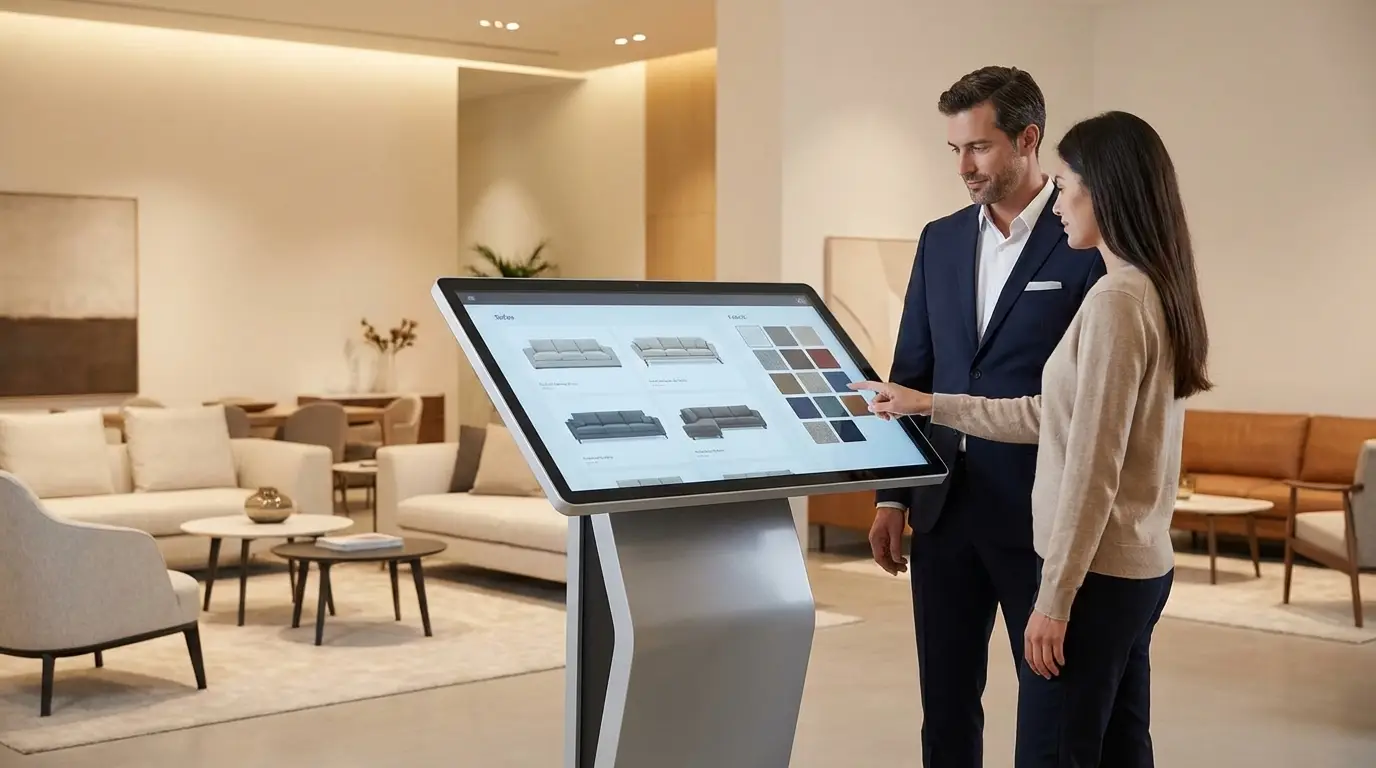
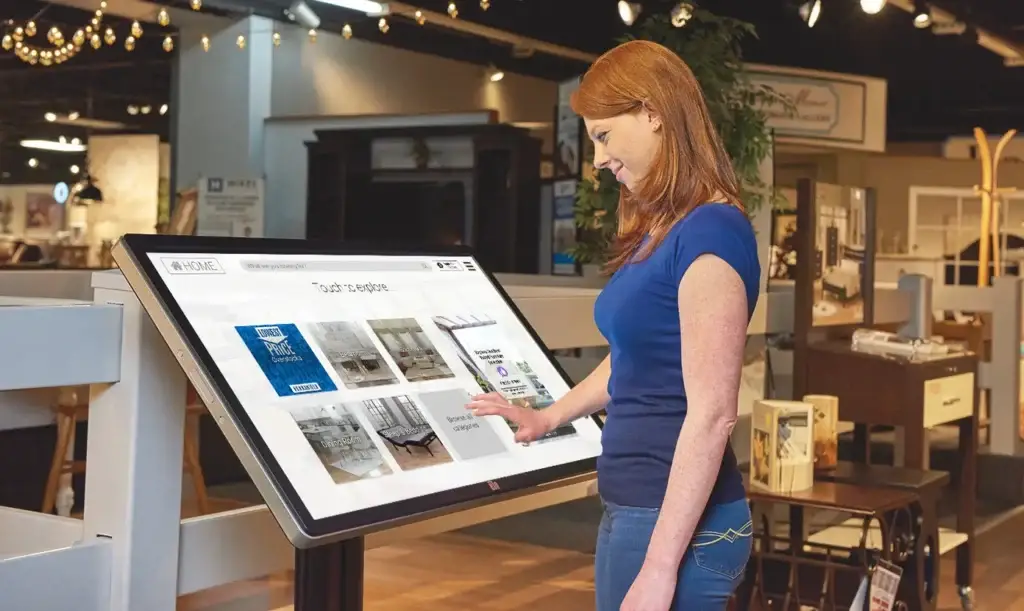
Wonder’s extended aisle is that path. The in-store kiosk puts a much larger catalog on the square footage you already pay for. Then shoppers browse what you chose to turn on, and your team sells from the same product data. For the footprint side of this, see How Retailers Can Sell More Without Expanding.
A gallery is the floor layout that makes the offer obvious: a few samples set a theme, and the kiosk holds the rest of the category. That layout is written up in the retail gallery playbook.
What to say at the desk
When the piece is not on the floor, the associate’s sentence should be specific. “This one ships to your house from our supplier network. I can see the freight and the delivery window before you pay.” Then read the window the kiosk shows.
Shoppers will wait on a special order when the date is said up front. However, they cancel when the date arrives later as a surprise. While you are comparing a stocked piece with a fulfilled piece, talk about the finish, the size, and the date. The supply chain name is for your team. The price and the window are what the customer needs to hear.
A practical way to start
Start with one category you would rather not warehouse. Outdoor cooking, exercise equipment, pet products, and sporting goods are the large-format examples Iman Schrock, president of GigaCloud, has named publicly, because they are awkward to inventory and fulfill in a traditional store.
Then run four checks before the first order:
- Confirm the SKU ships to your customer’s ZIP, and write down the service level you will quote.
- Then price the flat-rate freight into the ticket before the associate quotes it.
- After that, put only approved SKUs on the kiosk, so the floor cannot sell an item you have not turned on.
- Tell the shopper that the item ships to them after the sale, and that tracking will follow.
After that, watch cancels, damage calls, and the minutes your team spends explaining the wait. If those stay calm, add a second category. If they do not, fix the offer before you widen it.
You can book a Wonder demo and walk that path with your own categories. Bring one ZIP code you actually serve, and one category you are tired of stocking.