A furniture pricing strategy is the set of rules your store uses to price each product so it covers cost, protects margin and still makes sense to a shopper who compares. Here is the short version. Keep your usual markup on items only you carry, and price the items shoppers can find on Wayfair or Amazon against the market, with a margin floor you never go below.
When I talk with furniture retailers, the same story keeps coming up: a shopper loves a sofa on the floor, checks their phone, and finds a lower price online before the associate gets back.

What is a furniture pricing strategy?
Most furniture stores start with cost plus a markup. The classic version is keystone pricing, where the retail price is twice the wholesale cost. It is simple. However, it only works well when the shopper has nothing to compare it to.
A complete furniture pricing strategy usually mixes three methods:
- Cost plus markup. A fixed multiplier on what you pay. This fits exclusives, custom orders and private label.
- Market based pricing. You set the price by looking at what the same product sells for elsewhere. This fits items shoppers can find online.
- Dynamic pricing. Market based pricing on a schedule, with rules that move the price for you and a floor that protects your margin.
Why does a single markup stop working online?
Shoppers compare. For example, a guest can look up the same product on a phone in seconds, often while standing in your showroom. As a result, one markup across the whole catalog leaves some items priced far above the market.
The big marketplaces already price this way. Wayfair explains on its seller site that it “uses a dynamic pricing system that continuously learns about items’ optimum prices and adjusts them.” So when your ecommerce price on an identical sofa sits well above that, the shopper notices, and the sale goes somewhere else.
That matters for any furniture pricing strategy, because every sale counts. Most guests leave without buying. In traditional furniture stores, only about one in four guests makes a purchase, according to Furniture Today.
Which furniture products need dynamic pricing?
First, split your catalog before you change a single price.
- Exclusive and special order items. Keep your standard markup. Nobody can compare an exact match, so your price reflects your selection and your service.
- Shopped items. For example, products sold under the same name on Amazon, Wayfair, Walmart, Target or Home Depot. These need market based pricing.
- Clearance and floor samples. Instead, price these to move, on your own schedule.
The shopped group is the one to watch. Because the prices around it keep moving, it needs a check at least daily.
How does a margin floor protect your furniture pricing strategy?
A margin floor is the lowest margin you will accept on a product. Because it protects everything else, set it first. After that, every price change, whether you make it by hand or a tool makes it for you, has to stay at or above that line.
This is the part that keeps dynamic pricing from turning into a race to the bottom. You can meet the market where it makes sense and let a sale go where the numbers don’t work.
Next, pick a market position. Do you want the lowest price found, a spot in the middle, or a price near the top that you win on service? Each choice works, but only when you apply it consistently.
How does Wonder Dynamic Pricing work for furniture retailers?
We built Dynamic Pricing for the GigaCloud Retail-Ready catalog, about 30,000 popular products that Wonder retailers can sell through their endless aisle. It sets the everyday ecommerce price for those items automatically, so the shopped part of your furniture pricing strategy runs without a spreadsheet.
- It checks prices at least daily on Amazon, Wayfair, Target, Walmart and Home Depot, plus listings found through Google Merchant Center.
- You choose a mode once during setup: Aggressive (the lowest market price found), Median (the middle of the market) or High (close to the highest price found).
- You set a margin floor during setup, and prices stay at or above it.
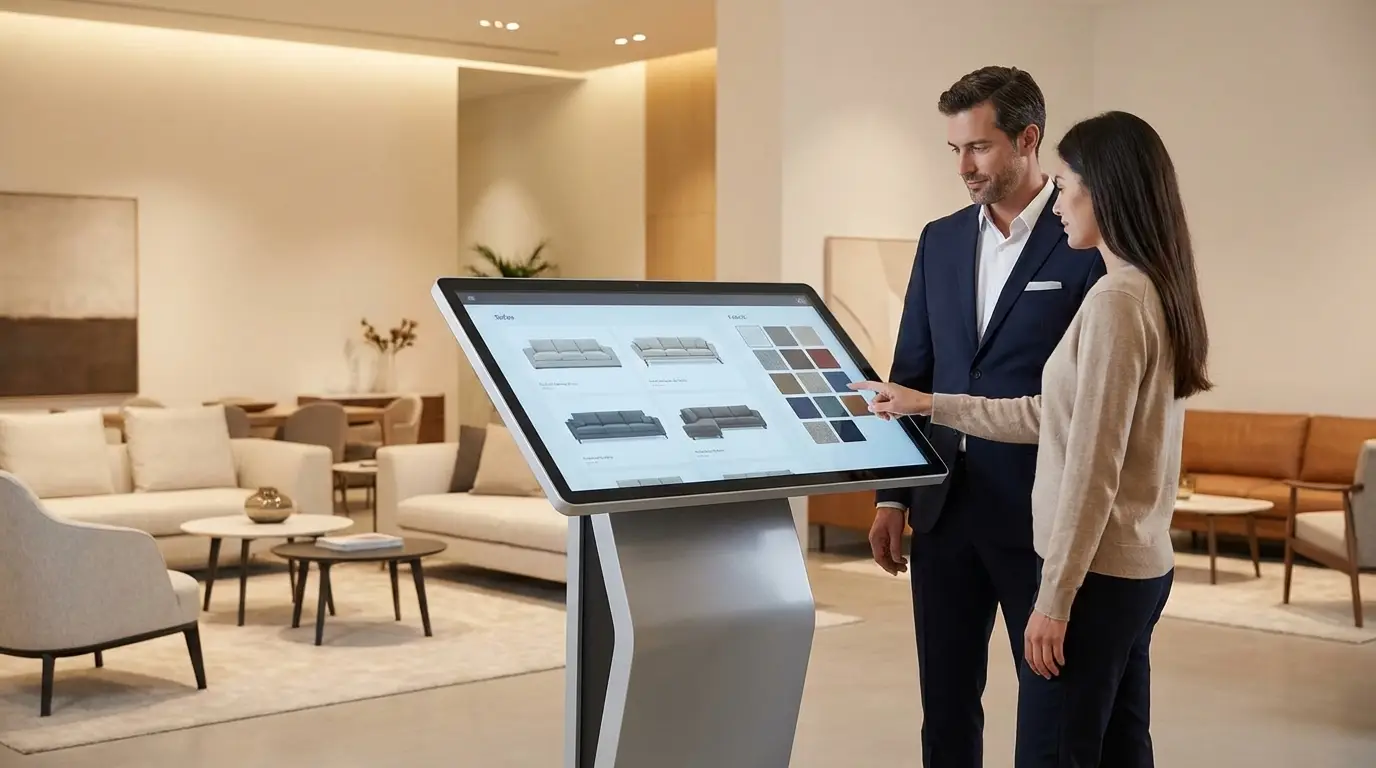
Those prices then go to your connected channels. That includes your Shopify store through the Shopify Connector, other platforms through our e-commerce connectors, and the Wonder kiosk and sales tablets in your showroom, which can show the same prices. Products outside that catalog keep the prices you set.
After a sale, Wonder automates ordering and fulfillment end to end from GigaCloud warehouses in California, New Jersey, Texas and Georgia. As a result, your team does not place a separate supplier order.
Should a furniture store price match Wayfair or Amazon?
Decide before the shopper asks, and make it part of your furniture pricing strategy. After all, a written rule is easier on your sales team than a judgment call at the register.
- Match only the identical product: same model, size and finish.
- Also, never match below your margin floor.
- Remind the guest what they get from you, like seeing and sitting on the piece in person and a local team to call.
In addition, when your shopped items are already priced against the market, you have far less to defend at the counter.
What should a furniture pricing checklist include?
- Tag every SKU as exclusive, shopped or clearance.
- Set a margin floor for each category.
- Pick a market position for shopped items: lowest, middle or near the top.
- Then check shopped prices at least daily, by hand or with a tool.
- Finally, make sure your website, kiosk and sales tablets show the same price.
Frequently asked questions about furniture pricing strategy
What is the best furniture pricing strategy for an independent store?
Use a mix. Keep your standard markup on exclusive and special order items, and use market based pricing with a margin floor on the products shoppers can compare online.
What is keystone pricing in furniture?
Keystone pricing sets the retail price at twice the wholesale cost. It is simple to run, and it works best on items a shopper cannot match to an identical listing online.
How often should a furniture store update prices?
Check prices on shopped items at least daily. Wonder Dynamic Pricing checks major retailers at least daily for the GigaCloud Retail-Ready catalog and keeps every price at or above your margin floor.
Does dynamic pricing mean always having the lowest price?
No. You choose the market position. Aggressive uses the lowest market price found, Median sits in the middle, and High prices close to the highest price found. Your margin floor applies in every mode.
Want to see how this works with your own catalog? Book a short walkthrough and we will show you Dynamic Pricing on real GigaCloud products.