Shoppers shortlist sofas and mattresses inside ChatGPT, Perplexity, and Google AI Overviews. Independent furniture retailers win that shortlist when product data is complete, structured, and current.
A shopper types “best hybrid mattress under $1,500 near Tampa” into ChatGPT or Perplexity. The answer names two national sites and one brand they already know. Your store carries the right product, at a competitive price, with a salesperson who can close it this afternoon. The model never mentions you.
That gap is now a merchandising problem. ChatGPT search pulls live web sources and cites them in the reply. Ashley partnered with Perplexity and PayPal so shoppers can ask for recommendations, add items to a cart, and pay inside one conversation. National furniture retail already treats AI platforms as a storefront. Independents who still treat the website as a brochure stay off the shortlist.

At a glance
- Shoppers research big-ticket furniture and mattresses in ChatGPT, Perplexity, Gemini, and Google AI Overviews before they walk the floor.
- Models recommend products they can parse: names, dimensions, materials, variants, price, availability, and location.
- Schema.org Product markup and FurnitureStore local data give crawlers a machine-readable catalog.
- Incomplete PDFs, stale SKUs, and “call for price” pages drop you from answers even when you stock the item.
- Wonder keeps product data structured and current so the same catalog feeds the website, kiosk, and every AI-readable channel.
Why AI search now decides who walks in
Furniture is a considered purchase. Shoppers ask long, messy questions: “sectional that fits an 11-foot wall, performance fabric, kids and a dog, delivered in 4 weeks.” A traditional search page returns ten blue links. An AI answer returns a shortlist and a reason for each pick.
OpenAI designed ChatGPT search so people can ask in natural language, follow up, and click through to sources (OpenAI). Ashley’s leadership said customers already “begin their furniture search on AI platforms such as Perplexity” (CX Dive). ChatGPT also added shopping research that compares options and names “reliable retailers.” If your site does not look like a reliable source of product facts, the model has nothing to cite.
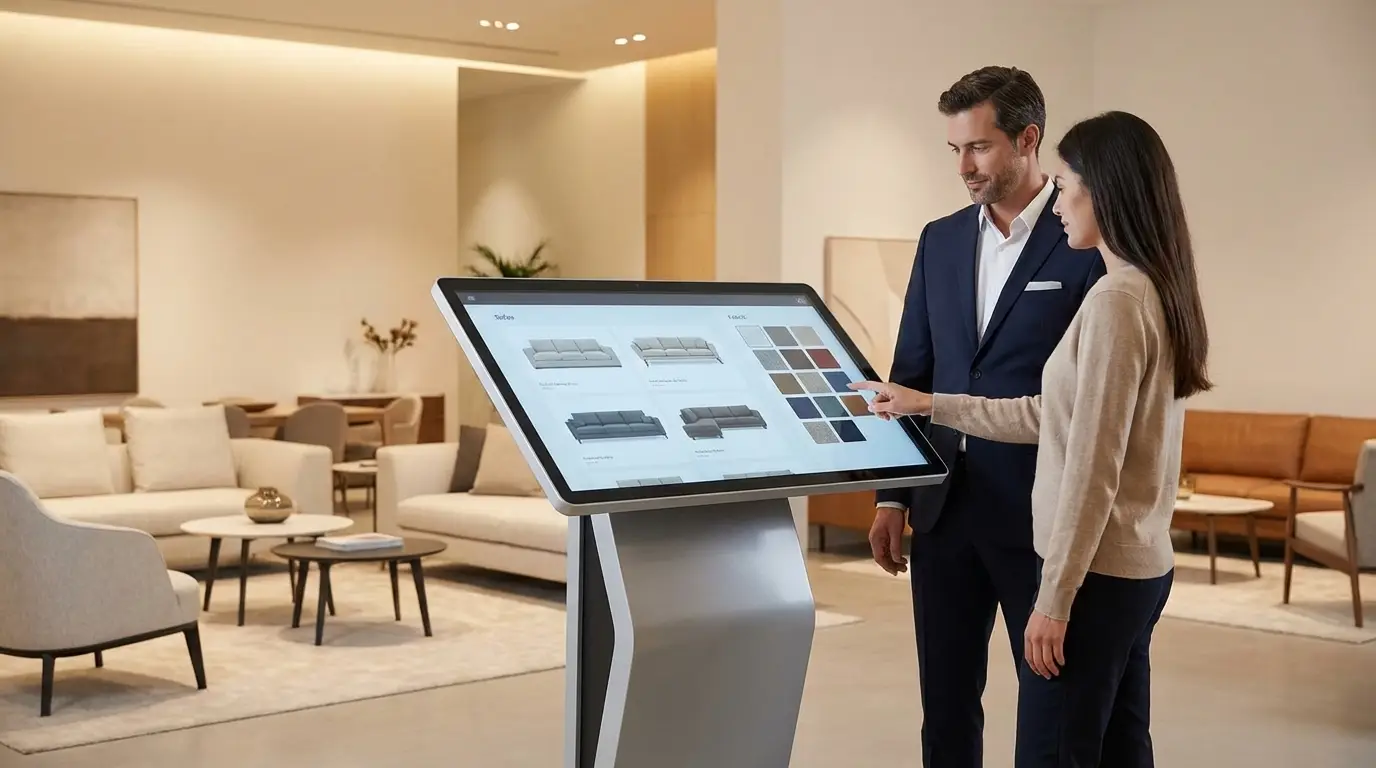
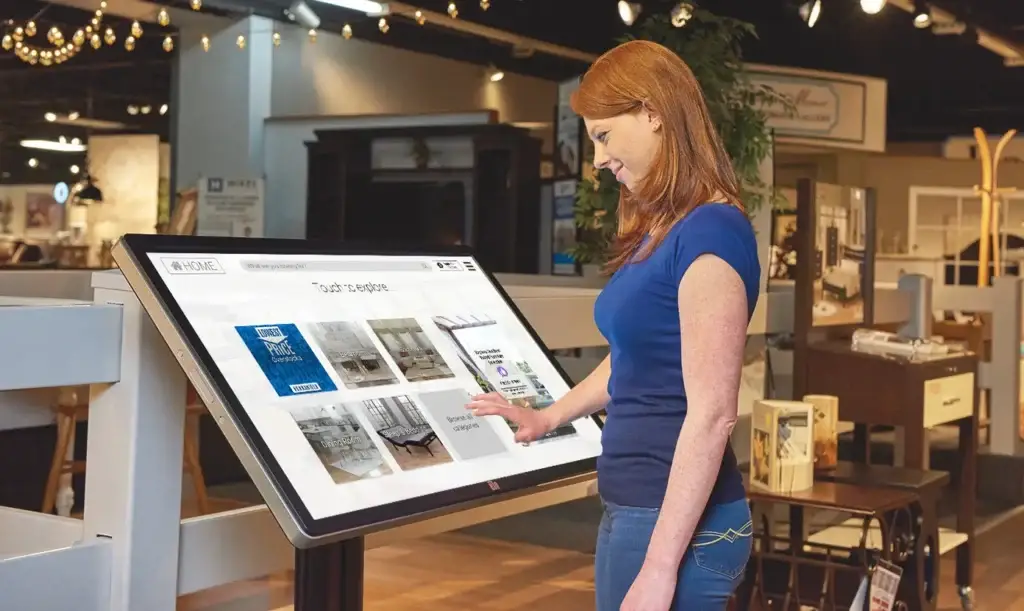
The floor still closes the sale. Discovery happens earlier. That is the same reason endless aisle tools matter once the guest arrives: they came in with a shortlist, and you need every finish and size ready to show.
What AI systems actually read
Models do not browse the showroom. They ingest pages, feeds, and structured fields. commercetools frames this as AI-ready product data: attributes an agent can match to a prompt without guessing.
For furniture and mattresses, that means more than a pretty hero image:
- Exact product name and brand, not marketing nicknames only
- Dimensions, weight, seat height, sleep size, coil count, comfort feel
- Materials, certifications, and care
- Color, fabric, finish, and configuration variants
- Price, sale price, and availability
- Lead time or stock status
- Store name, city, hours, and service area
Google documents how to mark product variants with ProductGroup and Product schema, including properties such as color. Merchant Center still expects the core product data specification: identifiers, category, price, availability, and a detailed description. Schema.org also defines a FurnitureStore type for the business itself.
When those fields live only in a sales binder or a vendor PDF, the model cannot recommend you. When they live as structured data on crawlable pages, the same SKU can appear in Google Shopping, AI Overviews, and conversational search.

Seven questions retailers ask (and how to answer them)
1. How do I get my furniture store into ChatGPT answers?
Publish crawlable product pages with unique URLs, complete attributes, and schema. ChatGPT search cites web sources (OpenAI). A homepage with three lifestyle photos and a “shop our brands” list gives the model almost nothing to quote. SKU-level pages with specs, FAQs, and local pickup or delivery language give it a citation.
2. Why does Perplexity name national chains and skip independents?
Perplexity answers from sources it can retrieve and compare. Ashley built a shoppable path inside Perplexity (CX Dive). Independents rarely have that partnership, so the practical path is the same data those platforms already consume: structured catalogs, consistent NAP (name, address, phone), and current inventory. Thin or outdated sites lose to whoever published the cleaner record.
3. Is this different from regular furniture store SEO?
Classic SEO still matters: titles, internal links, reviews, local pages. AI search adds a parsing requirement. Google’s product variant docs exist because search (and AI Mode) need variant-identifying properties, not one blob of marketing copy (Google). You optimize for a machine that must match “queen hybrid, medium-firm, cooling cover, under $1,500” to a row in your catalog.
4. What product fields matter most for mattresses and upholstery?
Mattresses: size, construction, firmness, height, cooling features, trial and warranty, price, in-stock vs special order. Upholstery: overall and seat dimensions, configuration (sofa, sofa+chaise, sleeper), fabric grade, cleanability, leg finish, lead time. Missing one of those fields is enough for a model to pick a competitor who listed it.
5. Do I need a new website, or a better catalog?
Most independents need a better source of truth, not a redesign first. If vendors send spreadsheets and PDFs, and your site, kiosk, and Google feed each get a different version, AI systems will distrust all of them. Centralize attributes, then syndicate. Wonder’s job is that syndication layer: one structured catalog that stays current across channels.
6. How does this help once they reach the showroom?
The guest who found you in ChatGPT already decided a category and a budget. Your associate still has to show the SKU, the adjacent SKU, and the fabric they asked about. That is where closing tactics on the floor and 3D configuration earn the ticket. AI search fills the parking lot. The floor still writes the order.
7. What should I fix before fall selling season?
Audit 20 hero SKUs the way a model would. Search your own product names in ChatGPT and Perplexity. Note whether the answer cites you, a brand site, or a marketplace. Fix missing dimensions, dead variant pages, “call for price,” and out-of-date availability. Add Product and LocalBusiness / FurnitureStore markup. Then expand the same standard to the rest of the catalog.
A practical 30-day plan
Week 1: Inventory the truth. Pick your top 50 SKUs by margin. List every attribute a shopper asks on the floor. Mark what exists on the live product page versus what lives in a vendor sheet.
Week 2: Structure the pages. One URL per sellable configuration where it makes sense. Schema for Product (and ProductGroup for families). FurnitureStore markup for the location. Merchant Center fields complete (Google).
Week 3: Kill contradictions. Price on the site must match the feed and the tag. Availability must match the warehouse. Models punish conflicting facts by citing someone else.
Week 4: Test the questions. Run ten real shopper prompts (“performance fabric sectional for a family room in [your city]”). Capture who gets cited. Fix the SKUs that never appear. Repeat monthly.
Where Wonder fits
Wonder already sits between brands, reps, and retailers as the product data and sales-enablement layer. The same clean catalog that powers an in-store kiosk and a digital showroom is the catalog AI systems can read. Retailers who use Wonder stop rebuilding attributes for every channel. Brands who syndicate through Wonder give every dealer a consistent, current record instead of a stale PDF.
If your website, Google feed, and floor tools still disagree on a SKU, you will lose the AI shortlist and the in-store close. Get the data right once.
Complete your complimentary AEO/GEO website audit here: aeo.wondersign.com Book a demo at wondersuite.com if you want that catalog AI-ready before fall traffic returns.
Conclusion
AI search decides who the shopper considers before they park. ChatGPT cites the live web. Perplexity already supports shoppable furniture journeys for chains that showed up with data. Google still rewards structured product records.
Publish complete, structured, current product information. Keep one source of truth. Then use the showroom, financing, and configuration tools you already know to finish the sale. The retailers who treat the catalog as infrastructure will be the names those models keep repeating.